



Bruxism is an oral health disorder characterized by the involuntary grinding or clenching of teeth. Although common, this phenomenon remains largely unknown to the general public. Yet, its consequences on oral health and general well-being can be significant. According to recent studies, bruxism affects between 8% and 31% of the adult population, with a higher prevalence among young adults.
Symptoms of bruxism
Bruxism occurs mainly at night, often without the patient's knowledge. The most common signs include audible teeth grinding during sleep, often noticed by a bed partner, and abnormal tooth wear, particularly visible on the incisors and canines. Patients may also experience pain or fatigue in the masticatory muscles upon waking, which can extend to the temples, as well as morning headaches, particularly in the temporal region. Jaw stiffness upon waking, sometimes accompanied by difficulty opening the mouth fully, is also a frequent symptom.
Although less common, bruxism can also occur during the day. Affected individuals may unconsciously clench their jaws, often in response to stressful situations or intense concentration. This muscle tension can extend to the face, neck, and shoulder regions. Patients may also experience difficulty opening their mouths fully after long periods of concentration, as well as increased tooth sensitivity to hot, cold, or sugary foods.
The consequences of bruxism
Bruxism can have a significant impact on oral health. Premature wear of tooth enamel is a common consequence, which can lead to increased sensitivity and aesthetic problems. Increased tooth sensitivity is often due to exposure of the underlying dentin. In more severe cases, tooth fractures can occur, ranging from simple cracks to complete fractures requiring extensive treatment. The mechanical stress exerted by bruxism can also lead to gum recession, and in more severe cases, long-term tooth loss.
The effects of bruxism are not limited to oral health. This disorder can also have a significant impact on the temporomandibular joint (TMJ). Patients may experience chronic joint pain if bruxism is left untreated. Restricted jaw movement is another common consequence, reducing the ability to fully open the mouth. Clicking or crackling sounds when opening the mouth are signs of TMJ dysfunction, and displacement of the joint disc can lead to jaw locks.
In addition, bruxism can affect patients' quality of life. Sleep disturbances are common, with bruxism disrupting the sleep cycle and leading to fatigue and daytime sleepiness. Chronic headaches , often described as a feeling of tension in the temporal region, are also common. Facial and neck pain can extend to the shoulders and upper back, and the impact on social and professional life can be significant, with chronic daily pain and fatigue affecting performance and interpersonal relationships.
Diagnosis of bruxism
Diagnosis of bruxism is based primarily on a clinical examination . The dentist looks for signs of dental wear, including characteristic wear facets on the teeth, and palpates the masticatory muscles to detect hypertrophy or abnormal sensitivity. Evaluation of the temporomandibular joint is also essential, looking for pain, joint noises, or limitations in movement .
Additional diagnostic tools may be used to confirm the diagnosis. Specific questionnaires assess sleep habits and symptoms associated with bruxism. Polysomnographic recordings, considered the gold standard for diagnosing nocturnal bruxism, measure masticatory muscle activity during sleep. Electromyography of the masticatory muscles can also be used to quantify muscle activity during the day or night.
Innovations in the management of bruxism
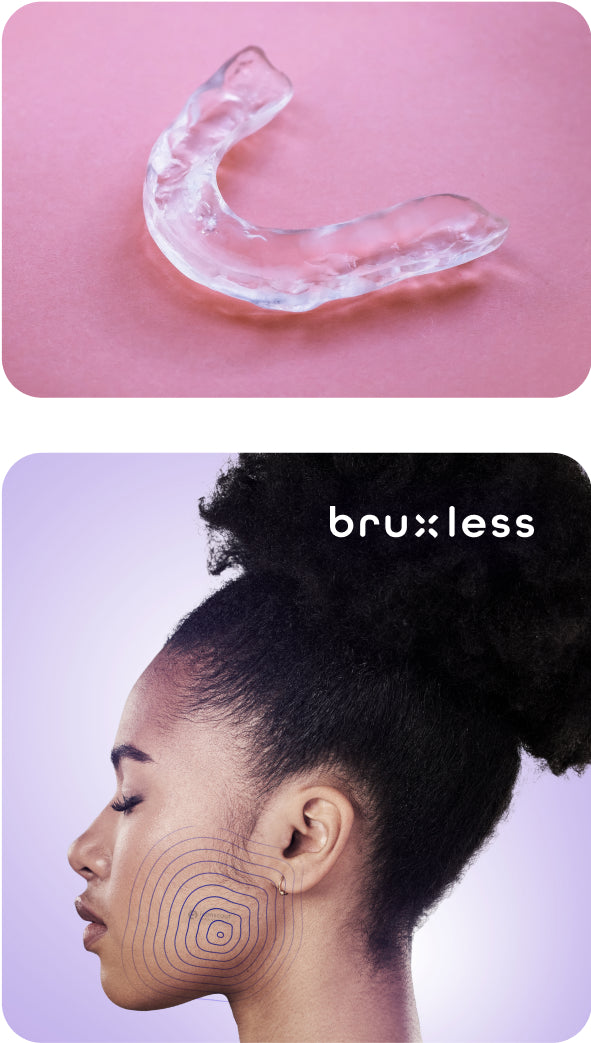
Among recent innovations, we can cite the development of the Bruxless device, a solution aimed at detecting and interrupting episodes of nocturnal bruxism. Our promising technology is revolutionizing the management of this disorder by offering real-time intervention.
Other innovations include smart splints equipped with sensors to measure the frequency and intensity of bruxism episodes, as well as mobile applications to track sleep habits and bruxism triggers, but these do not treat the problem, unlike Bruxless.
Scientific research continues to explore new avenues for understanding and treating bruxism. For example, recent studies are looking into the potential role of certain neurotransmitters, notably dopamine, in the onset of bruxism. The genetics of bruxism is also a promising area of research, with some studies suggesting a genetic predisposition to this disorder, paving the way for personalized treatments.
Finally, the links between bruxism and other sleep disorders, such as sleep apnea, are also being explored.
Conclusion
Bruxism, although often underestimated, can have significant consequences on oral health and quality of life. Early and appropriate management, combining different therapeutic approaches, is essential to limit its harmful effects. Technological advances and ongoing research offer promising new perspectives for people suffering from this disorder.
It is crucial for people who suspect they have bruxism to consult a healthcare professional for an accurate diagnosis and personalized treatment plan. Collaboration between dentists, sleep physicians, and other specialists is often necessary for optimal management of this complex disorder.
References:
Manfredini, D., Winocur, E., Guarda-Nardini, L., Paesani, D., & Lobbezoo, F. (2013). Epidemiology of bruxism in adults: a systematic review of the literature. Journal of orofacial pain, 27(2), 99-110.
Lobbezoo, F., Ahlberg, J., Glaros, AG, Kato, T., Koyano, K., Lavigne, GJ, ... & Winocur, E. (2013). Bruxism defined and graded: an international consensus. Journal of oral rehabilitation, 40(1), 2-4.
Lavigne, G.J., Khoury, S., Abe, S., Yamaguchi, T., & Raphael, K. (2008). Bruxism physiology and pathology: an overview for clinicians. Journal of oral rehabilitation, 35(7), 476-494.
What type of bruxer are you?


Tooth displacement, worsening of apnea, dependence: the 6 documented side effects of the bruxism splint, and when to consider other options.

Tooth wear, sleep disorders, migraines: discover the 9 documented consequences of bruxism and how to act before it sets in.

Bruxism, this involuntary jaw activity characterized by grinding or clenching of the teeth, often occurs...

Bruxism, defined as the involuntary grinding or clenching of teeth, is a multifactorial disorder that...


